

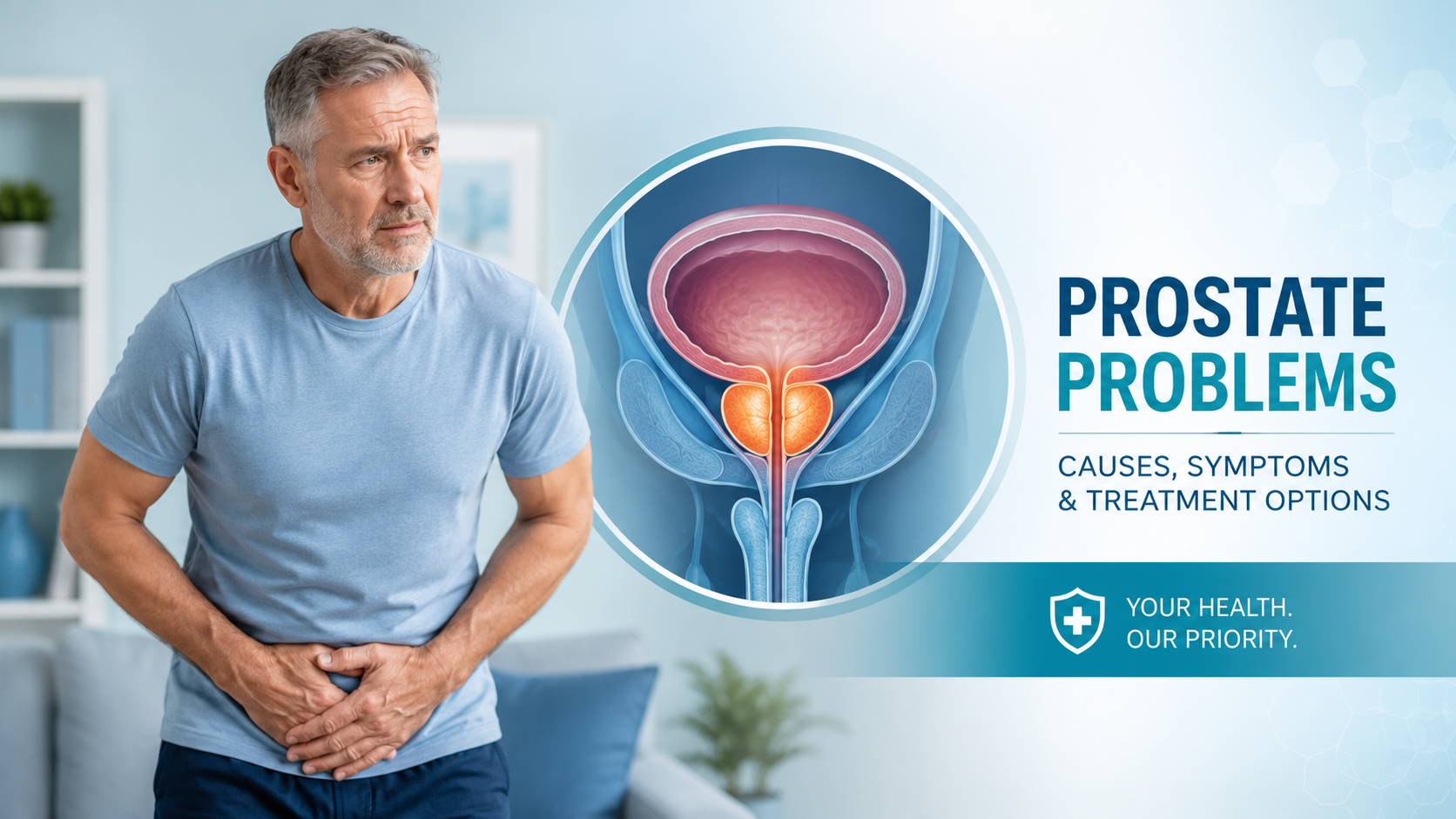
Many men notice subtle changes in how they urinate after turning fifty. Prostate problems affect more than half of men over sixty. The tissue around your urethra often grows larger with age. Early detection makes nearly every condition easier to manage.
What Prostate Problems Actually Mean
Your prostate wraps around the tube that carries urine from your bladder. This walnut-sized gland sits just below your bladder. It produces fluid that protects and nourishes sperm during ejaculation.
Three main conditions affect this gland as you age. Benign prostatic hyperplasia means the gland grows larger without cancer. Prostatitis involves inflammation from infection or other causes. Prostate cancer develops when cells multiply without normal controls.
Each condition shows different symptoms and needs different treatments. You can have more than one at the same time. Size doesn’t always predict how much trouble you’ll experience.
Signs Your Prostate Problems Need Attention
Weak urine flow often appears first. You might stand at the toilet longer than before. The stream starts slowly or stops midway through urinating.
Waking up multiple times at night disrupts your sleep. Two trips might become four or five. You feel tired during the day from interrupted rest.
Some men feel sudden urgent needs to urinate immediately. This happens even when your bladder isn’t full. You might worry about finding a bathroom quickly when you’re out.
Pain shows up differently depending on the specific condition. Sharp discomfort during urination suggests infection or inflammation. Dull aches in your lower back might signal other issues. Blood in urine always needs immediate medical evaluation.
How Doctors Diagnose Prostate Problems
Your doctor starts with questions about your symptoms. They ask how often you urinate and how strong your stream feels. A detailed history reveals patterns you might not notice yourself.
The digital rectal exam checks your prostate’s size and texture. Your doctor inserts a gloved finger to feel the gland. This takes less than a minute and provides valuable information.
Blood tests measure prostate-specific antigen levels in your system. Higher numbers can indicate problems worth investigating further. Age affects what counts as a normal reading for you.
Urine tests show infections or blood cells. Flow studies measure how quickly you empty your bladder. Ultrasound images reveal the gland’s exact size and shape. These tools help doctors choose the right treatment approach.
Treatment Options for Enlarged Prostate Problems
Watchful waiting works when symptoms stay mild and manageable. You visit your doctor regularly to track any changes. Many men live comfortably without immediate intervention.
Alpha blockers relax muscles around your prostate and bladder neck. Urine flows more easily within days of starting these medications. They don’t shrink the gland itself but improve your symptoms.
Five-alpha reductase inhibitors actually reduce prostate size over time. You take them daily for several months before noticing results. Natural supplements for prostate health offer another option many men explore alongside conventional treatments.
Surgery removes excess tissue blocking your urethra. Transurethral resection involves inserting instruments through your penis. Laser procedures vaporize overgrown tissue with less bleeding. Recovery typically takes a few weeks.
Understanding Prostatitis and Inflammation
Bacterial prostatitis comes from germs reaching your prostate gland. Antibiotics treat this infection over several weeks. Symptoms often include fever and severe pain when urinating.
Chronic prostatitis lasts months or returns repeatedly. Doctors can’t always find bacteria causing the inflammation. Pain appears in your pelvis, lower back, or genitals.
Treatment combines medications with lifestyle changes. Warm baths ease discomfort temporarily. Anti-inflammatory drugs reduce swelling and pain. Some men benefit from pelvic floor physical therapy.
Avoiding caffeine and alcohol helps many patients feel better. Spicy foods can irritate an already sensitive system. Regular ejaculation may help flush bacteria from your prostate.
Prostate Cancer Detection and Treatment
Most prostate cancers grow very slowly over many years. Some never cause problems during your lifetime. Others spread aggressively and need immediate treatment.
PSA screening remains controversial among medical experts. Higher levels increase cancer risk but don’t confirm it. Many factors besides cancer raise this blood marker.
Biopsies remove small tissue samples for laboratory examination. Doctors use ultrasound guidance to target suspicious areas. Results show whether cancer cells exist and how aggressive they appear.
Active surveillance monitors slow-growing cancers without immediate treatment. You get regular tests to watch for any changes. This avoids unnecessary side effects from treating harmless cancers.
Radiation therapy kills cancer cells with targeted energy beams. Surgery removes the entire gland and surrounding tissue. Hormone therapy blocks testosterone that feeds cancer growth. Supporting prostate wellness becomes important during and after any cancer treatment.
Diet Changes That Support Prostate Problems
Tomatoes contain lycopene that may protect prostate cells. Cooked tomatoes release more of this helpful compound. Add tomato sauce to your meals several times weekly.
Cruciferous vegetables like broccoli and cauliflower offer protective benefits. Steam them lightly rather than boiling away their nutrients. Aim for several servings each week.
Green tea provides antioxidants that support prostate health. Drink two or three cups daily for best results. Skip adding too much sugar to keep it healthy.
Omega-3 fatty acids from fish reduce inflammation throughout your body. Salmon, sardines, and mackerel offer excellent sources. Eat fish at least twice weekly.
Limiting red meat and high-fat dairy may help. Some studies link these foods to increased prostate risks. Choose lean proteins and plant-based alternatives more often.
Lifestyle Habits for Better Prostate Problems Management
Regular exercise improves urinary symptoms in many men. Walking thirty minutes daily makes a noticeable difference. Physical activity also helps maintain healthy hormone levels.
Kegel exercises strengthen your pelvic floor muscles. Squeeze the muscles you’d use to stop urinating midstream. Hold for three seconds and repeat ten times daily.
Limiting fluids before bedtime reduces nighttime bathroom trips. Stop drinking two hours before you plan to sleep. Empty your bladder completely before getting into bed.
Stress worsens symptoms for many men with prostate issues. Find relaxation techniques that work for your lifestyle. Deep breathing or meditation helps calm your nervous system.
Maintaining a healthy weight reduces pressure on your bladder. Extra pounds around your middle compress your pelvic organs. Losing even ten pounds can improve your symptoms noticeably.
When Prostate Problems Become Emergencies
Complete inability to urinate needs immediate medical attention. Your bladder can hold only so much before causing damage. This situation feels extremely uncomfortable and potentially dangerous.
Heavy bleeding in your urine never qualifies as normal. Small amounts might come from minor irritation. Large clots or persistent bleeding requires emergency evaluation.
Severe pain in your lower abdomen suggests serious complications. Your bladder might be overly full and unable to empty. Infection could be spreading through your urinary system.
Fever combined with urinary symptoms indicates possible kidney infection. Bacteria may have traveled upward from your prostate. You need antibiotics started quickly to prevent serious illness.
Don’t wait when something feels seriously wrong. Proactive prostate care strategies help prevent emergencies before they develop.
Schedule an appointment with your doctor if you notice any urinary changes lasting more than a few days.
Frequently Asked Questions
Can prostate problems affect my sex life?
Yes, many prostate conditions can impact sexual function. Enlarged prostates sometimes reduce ejaculation volume or cause discomfort. Some medications for prostate issues affect erections or libido. Treatment side effects vary depending on the specific approach used.
At what age should I start worrying about my prostate?
Most doctors recommend baseline prostate discussions starting around age fifty. Men with family history of prostate cancer should start earlier. African American men face higher risks and should begin screening sooner. Talk with your doctor about your personal risk factors.
Do all men eventually develop prostate problems?
Not all men experience troublesome prostate symptoms. About half of men over sixty have some prostate enlargement. Many never develop symptoms serious enough to need treatment. Genetics and lifestyle both influence your individual risk.
Can I prevent prostate problems from developing?
You can’t completely prevent all prostate issues. Healthy diet and regular exercise reduce your overall risk. Maintaining normal weight helps minimize symptoms if problems develop. Early detection allows for easier management of most conditions.
How often should I get my prostate checked?
Screening frequency depends on your age and risk factors. Most men need checks every one to two years. Higher risk individuals might need more frequent monitoring. Your doctor creates a personalized schedule based on your situation.