

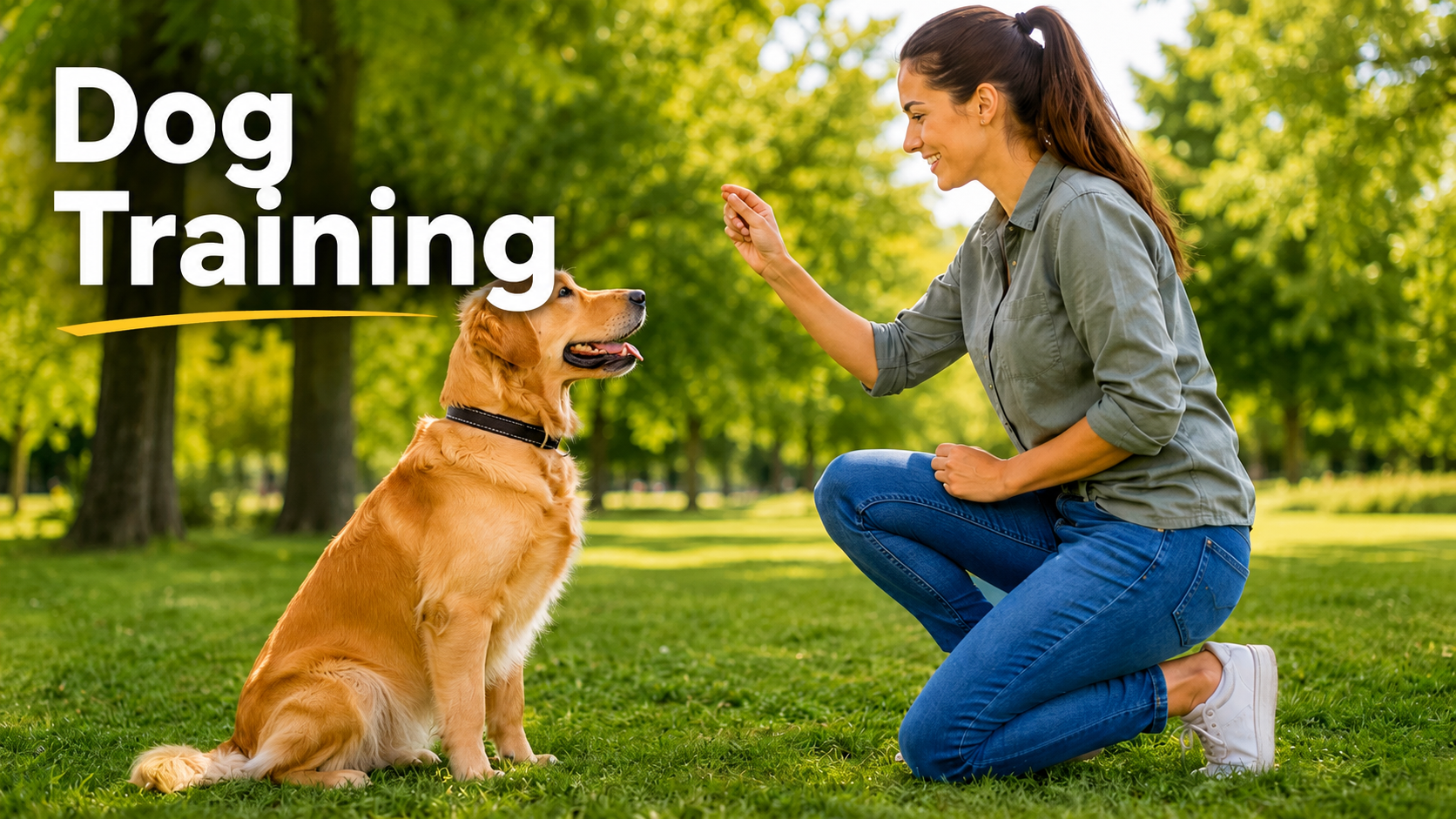
Your dog pulls you down the street every morning. The leash goes tight. Your shoulder aches. Dog training changes this specific problem faster than most owners expect.
Why Dog Training Starts With Your Energy
Dogs read your body language before they hear your words. You tense up when another dog approaches. Your dog feels that tension through the leash. He interprets your stress as danger ahead.
This creates a cycle. Your anxiety feeds his reactivity. His barking makes you more anxious. The loop continues until someone breaks it.
Calm energy doesn’t mean passive energy. You can be relaxed and firm at the same time. Think of how you’d handle a toddler running toward traffic. You’d stop them with certainty but without panic.
Your dog needs that same clarity. He wants to know you’re in control. When you project confidence, he relaxes his guard.
The Foundation of Dog Training: Timing Matters More Than Treats
Most people reward their dog three seconds too late. The dog sits, stands up, then gets the treat. You just rewarded standing, not sitting.
Dogs connect rewards to what happened one second ago. Not five seconds. Not ten. The exact moment matters.
This explains why your dog ignores commands at the park. At home, you had time to deliver treats slowly. At the park, distractions move fast. Your timing falls apart under pressure.
Practice your timing without your dog first. Set a timer for random intervals. When it beeps, immediately tap your pocket. This trains your reflexes. Then add your dog back into the equation.
A clicker solves the timing problem for many owners. The click marks the exact moment of good behavior. The treat can follow three seconds later. The dog still connects the reward to the right action.
Common Dog Training Mistakes That Create Confusion
You say sit seventeen different ways. Sometimes it’s “sit down.” Other times it’s “sit, sit, SIT.” Sometimes you pat your hand in the air.
Your dog hears seventeen different commands. He doesn’t know they all mean the same thing. Consistency isn’t optional.
Another mistake happens when you repeat commands. You say “come” six times before your dog responds. Now “come” means he has six chances to ignore you. He’ll wait until attempt five or six.
Say it once. Then enforce it. If he doesn’t respond, go get him. Don’t repeat yourself into irrelevance.
Many owners also accidentally reward the behavior they’re trying to stop. Your dog jumps on guests. You push him down while talking to him. He just got attention for jumping. That’s a reward.
Ignore what you don’t want. Reward what you do want. It sounds simple because it is.
How Dog Training Methods Differ By Breed and Temperament
A border collie needs a job. Without one, he’ll create his own job. That job might be herding your kids or destroying your couch.
Herding breeds think fast and bore easily. They need mental challenges, not just physical exercise. A tired border collie is a dog who ran six miles. An exhausted border collie is one who worked on scent games and puzzle toys.
Hounds follow their nose above everything else. A beagle on a scent trail doesn’t hear you calling. His biology takes over. You can’t train away genetics.
Work with breed instincts instead of against them. Give your hound structured sniffing time. Let him track treats in the yard. Then he’ll be more willing to focus when you need him.
Guardian breeds like German Shepherds need socialization more than other dogs. They’re naturally suspicious of strangers. Early exposure to different people prevents fear-based aggression later.
Small dogs often get excused from basic manners. Owners laugh when a Chihuahua growls over food. They wouldn’t laugh if a Rottweiler did it. Size doesn’t change what’s acceptable behavior.
Dog Training Tools That Actually Work
A six-foot leash gives you more control than a retractable one. Retractable leashes teach dogs to pull. The leash extends when they pull forward. They learn pulling gets them where they want to go.
A standard leash keeps your dog in a consistent boundary. He learns to walk within that space. You can tighten or loosen as needed.
Long lines work differently than regular leashes. They’re fifteen to thirty feet long. You use them in open areas to practice recall. Your dog feels free but you still have a safety backup.
Head halters change the game for strong pullers. When your dog pulls, the halter gently turns his head back toward you. Dogs can’t pull forward when their head turns sideways. The physics work in your favor.
Many owners resist head halters because they look like muzzles. They’re not muzzles. Your dog can eat, drink, pant, and bite if needed. The halter just gives you steering control.
Training treats should be tiny. The size of a pea. You’ll give dozens during a session. Large treats fill your dog up fast. Then he stops caring about rewards. If you’re looking for proven techniques for better results, focus on reward size and timing together.
The Reality of Dog Training Timelines
You won’t fix years of bad habits in one weekend. Your dog practiced pulling on the leash for three years. He won’t master loose-leash walking in two days.
Most basic commands take two weeks of daily practice. Sit, down, stay. These need fifteen minutes per day minimum. Not fifteen minutes once. Fifteen minutes every single day.
Behavior modification takes longer. If your dog has separation anxiety or reactivity, expect three months. Some cases take six months. Complex issues need time to unravel.
This frustrates owners who want instant fixes. They try for a week, see small progress, then quit. The small progress was the beginning. They stopped right before the breakthrough.
Dogs learn in stages. First they understand in a quiet room. Then in the backyard. Then on an empty street. Finally in distracting environments. Each stage takes additional practice.
You can’t skip stages. Your dog sits perfectly at home. You take him to the park and he acts like he never learned it. That’s normal. He hasn’t generalized the command yet.
Socialization Windows and Critical Periods in Dog Training
Puppies have a socialization window from three to fourteen weeks old. During this time, new experiences create confident adult dogs. After fourteen weeks, the window starts closing.
This doesn’t mean dogs can’t learn after fourteen weeks. They can. But fear responses develop more easily in older puppies. What would’ve been neutral at ten weeks might be scary at eighteen weeks.
Expose your puppy to different surfaces. Grass, concrete, gravel, sand, tile. Let him experience various sounds. Vacuum cleaners, doorbells, traffic, children playing. Each exposure builds confidence.
Don’t flood your puppy with experiences. Gradual exposure works better than overwhelming him. One new thing per day beats ten new things at once.
Older dogs can still be socialized. It just takes more patience. You’re changing established patterns instead of creating new ones. For comprehensive guidance on working with dogs of any age, check out this step-by-step training resource that covers all life stages.
Adult rescue dogs often missed early socialization. They might fear men with beards. They might panic around skateboards. These aren’t personality flaws. They’re experience gaps you can slowly fill.
When Dog Training Needs Professional Help
Some problems need expert eyes. Aggression toward people or other dogs tops that list. One bite can’t be taken back.
Resource guarding escalates quickly without proper intervention. Your dog growls over his food bowl. Next month he snaps. The month after, he bites. Professionals know how to interrupt this progression safely.
Severe separation anxiety also warrants professional help. Your dog isn’t being dramatic. He’s experiencing genuine panic. You wouldn’t treat a panic disorder without guidance. Same applies here.
Look for trainers with certifications. CPDT-KA or CBCC-KA credentials mean something. These aren’t weekend certificates. They need education, experience, and passing difficult exams.
Avoid trainers who guarantee results. No ethical trainer makes guarantees. Too many variables exist. The dog’s history, your consistency, genetic factors. Guarantees signal inexperience or dishonesty.
Good trainers teach you more than they train your dog. They show you how to read body language. They explain why methods work. They want you to succeed without them eventually. This approach to building lasting skills creates independence instead of dependence.
Group classes work well for basic obedience and socialization. Private sessions suit behavior problems better. Your dog won’t practice polite greetings when he’s lunging at every dog in class.
Start working with your dog today using one simple command in a quiet room.
Frequently Asked Questions
How long does it take to fully train a dog?
Basic obedience takes two to three months with daily practice. Behavior modification for issues like anxiety needs three to six months. Advanced training continues throughout your dog’s life. Consistency matters more than speed.
What age should I start training my puppy?
Start training the day you bring your puppy home. Even eight-week-old puppies can learn basic commands. Early socialization between three and fourteen weeks shapes your dog’s adult temperament. Waiting wastes valuable learning time.
Can you train an older dog new commands?
Yes, older dogs learn throughout their lives. They might take slightly longer than puppies. However, adult dogs often focus better during training sessions. Previous bad habits need more time to change than teaching fresh skills.
How often should I train my dog each day?
Train for fifteen minutes twice daily for best results. Short, frequent sessions work better than long ones. Dogs lose focus after fifteen to twenty minutes. You can do quick two-minute refreshers throughout the day.
What’s the most important command to teach first?
Teach recall first. A reliable come command can save your dog’s life. Practice in low-distraction areas before trying it outside. Always reward generously when your dog comes. Never call your dog to you for something unpleasant.