

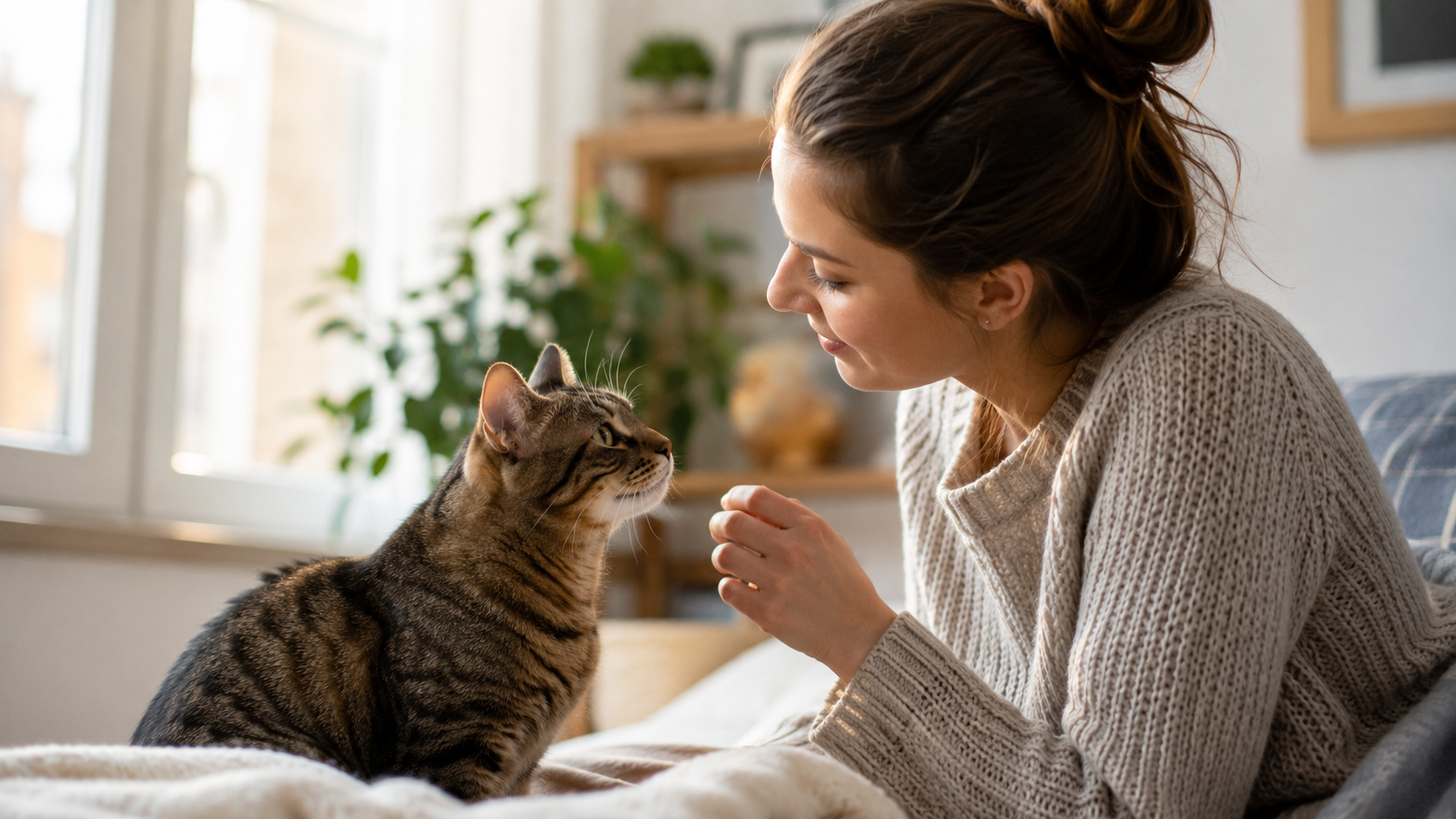
How to communicate with your cat starts with watching what your cat already tells you. Most owners talk at their cats without listening. Cats send constant signals through their bodies and voices. The key is learning their language before expecting them to learn yours.
Communicate with Your Cat Through Body Language
Your cat’s tail works like a mood ring you can read from across the room. A tail held high signals confidence and happiness. A puffed tail means your cat feels threatened. A low or tucked tail shows fear.
The speed of tail movement matters just as much as position. A slow swish indicates your cat is focused on something interesting. Fast thrashing means irritation or overstimulation. Stop petting immediately when you see this.
Ears rotate to show emotional states throughout the day. Forward ears mean your cat feels curious and engaged. Ears flat against the head signal aggression or extreme fear. Sideways ears show uncertainty.
Eye contact carries different meaning for cats than for humans. A slow blink from your cat translates to affection and trust. Return the gesture by slowly closing and opening your eyes. This creates a bonding moment without words.
Wide pupils can indicate excitement or fear depending on other body signals. Narrow slits suggest your cat feels content or potentially aggressive. Context matters when reading eye changes.
Decoding Your Cat’s Vocal Communication
Cats develop specific meows just for their human companions. They rarely meow at other cats after kittenhood. Your cat has created a custom vocabulary designed for you.
Short, high-pitched meows usually request something like food or attention. Long, drawn-out meows often express complaint or discomfort. Multiple meows in succession signal urgency or excitement.
Chirps and trills sound like a rolled “r” sound. Mother cats use these to call their kittens. Adult cats trill at you as a friendly greeting. Understanding cat vocalizations helps you respond to their needs faster.
Purring doesn’t always mean happiness despite popular belief. Cats also purr when sick, injured, or giving birth. The sound may serve as self-soothing during stress.
Hissing and growling need no translation. Your cat wants space immediately. Respect this boundary every single time.
How to Communicate with Your Cat Using Touch
Most cats prefer being petted on their head and cheeks. These areas contain scent glands they use for marking. Petting here mimics friendly cat-to-cat behavior.
The belly is often off-limits even for trusted humans. A cat showing its belly demonstrates trust but not an invitation. Many cats will bite or scratch if you touch this vulnerable area.
Pay attention to where your individual cat enjoys being touched. Some love chin scratches while others prefer neck rubs. Your cat will lean into touches they enjoy.
Duration matters as much as location when petting cats. Three to five strokes often satisfy a cat better than endless petting. Watch for signs your cat has had enough.
Overstimulation happens quickly with some cats. The same petting that felt good thirty seconds ago suddenly becomes irritating. Learn your cat’s threshold and stop before reaching it.
Talking to Your Cat in Ways They Understand
Use a higher-pitched voice when speaking to your cat. Research shows cats respond better to higher frequencies. Keep your tone light and friendly.
Say your cat’s name before giving commands or information. This helps your cat distinguish relevant communication from background noise. Cats can learn to recognize their names.
Keep verbal cues short and consistent. Use the same word for the same action every time. “Down” should always mean get off the counter.
Timing connects your words to actions in your cat’s mind. Say “good” immediately when your cat does something you like. The delay of even two seconds weakens the connection.
Volume rarely helps cats understand better. Yelling teaches fear, not comprehension. Speak at a normal volume or slightly softer.
How to Communicate with Your Cat During Play
Play mimics hunting behavior for cats. Your cat needs to stalk, chase, pounce, and capture. Provide toys that allow this complete sequence.
Move toys away from your cat rather than toward them. Prey runs away from predators in nature. This movement pattern triggers proper hunting responses.
Let your cat catch the toy regularly during play sessions. A hunt without success creates frustration instead of satisfaction. End each session with a capture.
Watch for signs your cat wants to play. A playful cat might bring you toys or exhibit sudden energy bursts. Recognizing these signals helps you bond through interactive activities.
Never use your hands or feet as toys. This teaches cats that human skin is appropriate to bite. Use wand toys to keep distance between hands and teeth.
Reading Your Cat’s Space and Territory Signals
Cats claim territory by rubbing their scent on objects and people. Head bunting against your leg marks you as part of their group. This behavior shows affection and ownership.
Scratching serves as both a visual and scent marker. Your cat isn’t being destructive when scratching your couch. They’re communicating ownership to other animals.
Some cats need hiding spots to feel secure. A cat under the bed isn’t necessarily scared. They might just want a quiet break from interaction.
Perching on high surfaces gives cats a security advantage. Elevated positions let them survey their territory safely. Provide cat trees or shelf access.
Your cat may follow you from room to room. This shadowing behavior indicates strong attachment. Your cat wants to stay near their preferred companion.
How to Communicate with Your Cat About Boundaries
Redirect unwanted behavior instead of punishing it. Move your cat away from the counter and place them near a cat tree. Show them where they can go.
Spray bottles and loud noises damage trust between you and your cat. These methods teach your cat to fear you. They don’t teach alternative behaviors.
Ignore attention-seeking behaviors you want to stop. Cats repeat actions that get reactions. Even negative attention reinforces the behavior.
Reward the behaviors you want to see more often. Give treats when your cat uses the scratching post. Positive feedback works better than punishment.
Consistency across all household members prevents confusion. Everyone must follow the same rules with the cat. Mixed messages create stress and behavioral problems.
Understanding Your Cat’s Routine Communication
Cats thrive on predictable daily schedules. Feed your cat at the same times each day. This reduces anxiety and excessive meowing.
Your cat may become more vocal before regular events. Meowing before dinner time shows your cat learned the schedule. This demonstrates intelligence, not poor behavior.
Morning wake-up calls happen because cats are crepuscular. They’re naturally active at dawn and dusk. Scheduled play before bed can reduce early morning demands.
Some cats announce their bathroom visits with meows. This behavior harks back to kittenhood when mothers stimulated elimination. It’s normal communication, not a problem.
Changes in routine communication often signal health issues. A usually quiet cat that becomes vocal needs a vet check. New behavior patterns deserve attention.
Start observing your cat’s unique communication style today and respond consistently to build deeper understanding.
Frequently Asked Questions
Do cats understand when you talk to them?
Cats don’t understand words the way humans do. They recognize tone, pitch, and familiar sound patterns. Your cat can learn to associate specific words with actions through repetition. They read your body language and emotional state better than your vocabulary. Consistent use of the same words helps cats learn what you want.
Why does my cat meow at me constantly?
Constant meowing usually means your cat wants something specific from you. They may need food, water, a clean litter box, or attention. Some cats are naturally more vocal than others. Medical issues like thyroid problems can increase vocalization. Pay attention to when and where the meowing occurs to identify the cause.
How can I tell if my cat is happy?
Happy cats show relaxed body language with ears forward and tails up. They purr during petting and make slow blinks at you. A happy cat plays regularly and maintains a healthy appetite. They seek your company without seeming anxious. Kneading with their paws also indicates contentment.
What does it mean when my cat brings me dead animals?
Cats bring prey to their family group as a natural behavior. Your cat may be teaching you to hunt. Some experts think cats view you as part of their colony. This behavior shows trust and attachment despite seeming unpleasant. Indoor cats may bring toys instead of real prey.
Can I train my cat to come when called?
Yes, most cats can learn to come when called with proper training. Use treats and positive reinforcement every time your cat responds. Say their name clearly and reward immediate responses. Practice in short sessions several times daily. Keep training positive and never call your cat for unpleasant experiences like medication.