

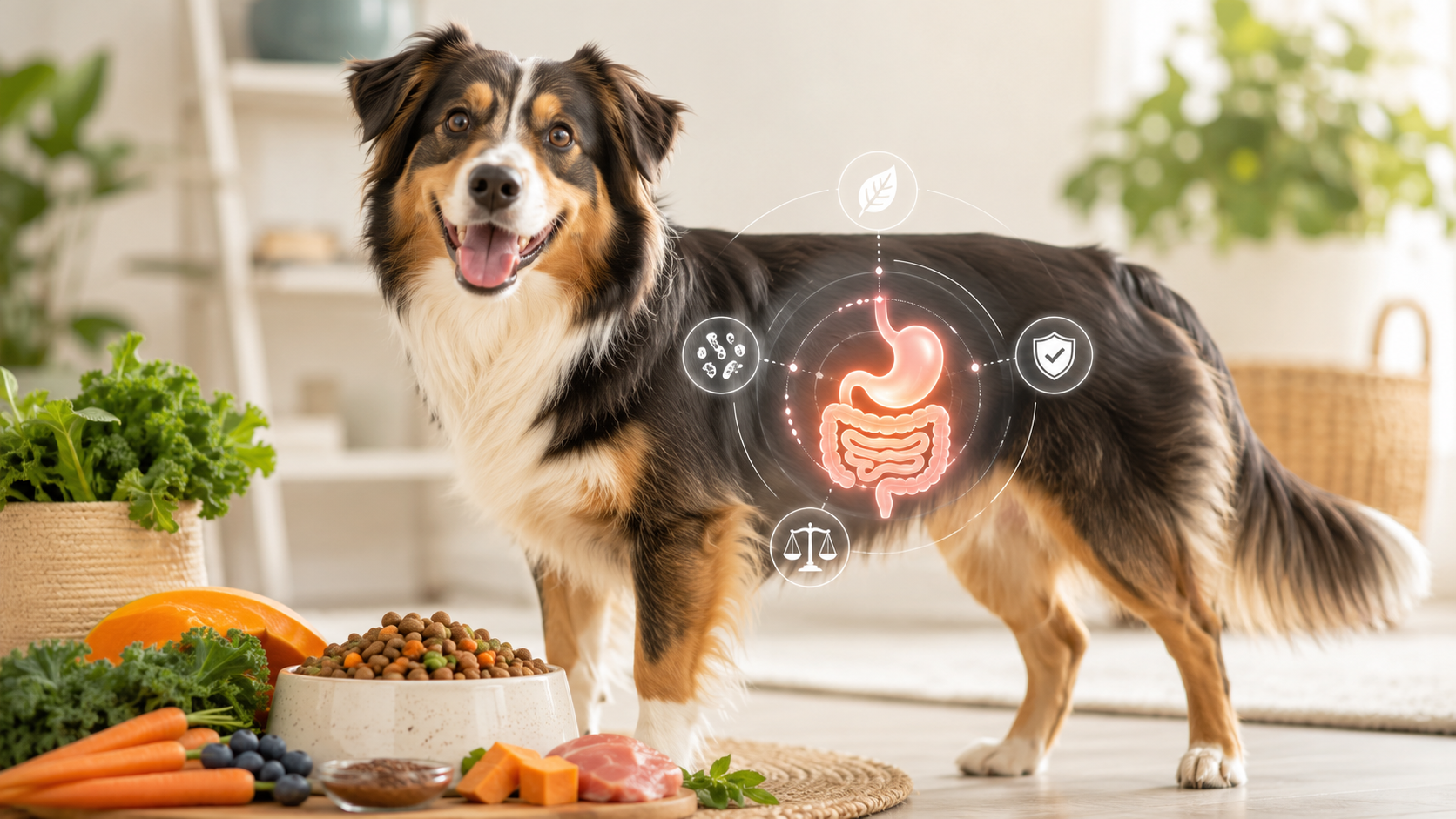
You notice your dog licking the floor again after every meal. His stomach makes odd gurgling sounds at night. Gut health for dogs affects everything from energy levels to behavior. The solution starts with understanding what lives inside your dog’s digestive system.
What Makes Gut Health for Dogs Different from Human Digestion
Dogs have shorter digestive tracts than humans. Food moves through a dog’s system in 24 hours on average. Humans take about three times longer. This speed means dogs process nutrients differently.
Your dog’s stomach acid is much stronger than yours. The pH level sits around 1 or 2. This helps them break down raw bones and meat. It also kills many harmful bacteria that would make humans sick.
Dogs need different bacterial strains in their gut than we do. Lactobacillus and Bifidobacterium species dominate a healthy canine microbiome. These bacteria produce enzymes that break down proteins and fats. They also create vitamins your dog can’t make on his own.
Signs Your Dog’s Digestive System Needs Attention
Soft stools that don’t hold their shape point to imbalance. You might see mucus coating the stool. This happens when the intestinal lining gets irritated.
Watch for changes in appetite. A dog who suddenly becomes picky wasn’t just deciding to be difficult. Nausea from bacterial overgrowth makes food smell unappealing. Gas that clears a room also signals fermentation problems.
Skin issues often trace back to the gut. Chronic ear infections repeat because yeast overgrows internally first. Hot spots and constant paw licking follow the same pattern. The immune system lives mostly in the digestive tract.
Your dog might eat grass more often. He’s trying to add fiber and induce vomiting. Some dogs scoot their rear on the ground. People assume it’s worms. It’s usually inflammation from poor digestion.
How Antibiotics Damage Gut Health for Dogs
One round of antibiotics wipes out beneficial bacteria for weeks. The medication can’t distinguish between harmful and helpful microbes. It kills everything in its path.
Your dog needs those good bacteria to digest food properly. Without them, partially digested food particles leak through the intestinal wall. This triggers immune responses throughout the body. Veterinarians call this leaky gut syndrome.
Yeast moves in when bacteria populations crash. Candida naturally exists in small amounts. It explodes when competition disappears. You’ll see skin problems emerge within days of finishing antibiotics.
Recovery takes deliberate action. The gut won’t repopulate with the right bacteria on its own. You need to introduce specific probiotic strains designed for dogs. Standard yogurt doesn’t contain the right species.
The Connection Between Diet and Gut Health for Dogs
Kibble creates problems most owners never connect to the bag. High carbohydrate content feeds the wrong bacteria. Dogs evolved eating mostly protein and fat. Their systems aren’t designed for grain-heavy meals.
Food sensitivities develop from repeated exposure to the same proteins. Chicken appears in almost every commercial dog food. Your dog’s immune system starts treating it as a threat. Rotation matters more than most people think.
Fiber type determines which bacteria thrive. Soluble fiber from pumpkin feeds beneficial strains. Insoluble fiber from cellulose just adds bulk. Both have roles but serve different purposes.
Raw feeding supporters point to improved stool quality. Dogs on raw diets typically produce smaller, firmer stools. The higher digestibility means less waste. Cooked diets aren’t inherently bad. They just change the bacterial environment.
Prebiotics vs Probiotics for Canine Digestive Health
Prebiotics feed the bacteria already living in your dog’s gut. Think of them as fertilizer for a garden. They come from plant fibers your dog can’t fully digest.
Chicory root and dandelion greens provide excellent prebiotic compounds. Sweet potato skin contains resistant starch that beneficial bacteria love. These foods help existing colonies multiply.
Probiotics introduce new bacterial strains into the system. You’re planting seeds rather than feeding existing plants. Different strains do different jobs. Bacillus coagulans survives stomach acid better than other species.
Most dogs benefit from both approaches. Prebiotics alone won’t help if good bacteria are already depleted. Probiotics alone struggle without proper food sources. Combining both strategies produces faster results.
Stress Impact on Gut Health for Dogs
Your dog’s gut responds to emotional states immediately. Stress hormones alter the bacterial balance within hours. This explains why dogs get diarrhea at the vet.
Chronic stress does more damage than acute episodes. A dog living with constant anxiety maintains high cortisol levels. This suppresses beneficial bacteria and allows opportunistic strains to dominate.
Separation anxiety manifests physically in the digestive tract. The gut and brain communicate through the vagus nerve. Emotional distress sends signals that slow digestion and increase inflammation.
Changes in routine affect gut bacteria populations. Moving to a new home or adding a family member creates stress. You might see loose stools for days afterward. The digestive system needs time to restabilize.
Testing Options to Assess Your Dog’s Gut Health
Fecal tests reveal parasite presence but miss bacterial imbalances. Standard vet checks look for worms and giardia. They don’t analyze the microbiome composition.
Advanced microbiome testing became available in recent years. These tests map the bacterial populations in your dog’s stool. You get percentages of different species and diversity scores.
The results tell you if harmful bacteria outnumber beneficial ones. They show whether your dog has enough variety in his microbiome. Low diversity correlates with chronic health problems.
Blood tests can indicate gut inflammation. Elevated inflammatory markers suggest intestinal permeability. This helps confirm whether digestive issues are causing systemic problems.
Natural Approaches to Improve Gut Health for Dogs
Bone broth heals the intestinal lining remarkably well. The gelatin contains amino acids that repair damaged cells. Simmer bones for 24 hours to extract maximum benefits.
Fermented vegetables provide natural probiotics and enzymes. Small amounts of sauerkraut or kimchi work well. Start with a teaspoon per meal. Too much causes gas initially.
Digestive enzymes help when the pancreas isn’t producing enough. Older dogs especially benefit from supplemental enzymes. Food gets broken down more completely. This reduces the burden on intestinal bacteria.
Slippery elm bark soothes inflamed intestinal tissue. It coats the digestive tract and reduces irritation. Mix the powder with water to form a gel. Give it between meals for best results.
Fasting gives the gut time to reset itself. Skip one meal per week to allow complete emptying. This practice mimics how wild canines ate. The digestive system performs maintenance during empty periods.
Maintaining Long-Term Digestive Balance
Consistency matters more than perfection with diet choices. Sudden changes disrupt bacterial populations every time. Transition foods gradually over seven to ten days.
Monitor stool quality as your primary health indicator. Firm, segmented stools that hold their shape signal good digestion. Any deviation deserves attention before it becomes chronic.
Avoid unnecessary medications when possible. Every chemical your dog ingests affects gut bacteria. NSAIDs for pain relief damage the intestinal lining over time. Explore alternatives before reaching for pills.
Regular exercise supports healthy digestion in multiple ways. Movement stimulates intestinal contractions that push food through. Physical activity also reduces stress hormones that harm gut bacteria.
Water intake influences digestive function significantly. Dehydration concentrates digestive acids and slows motility. Keep fresh water available at all times. Some dogs need encouragement to drink enough.
Your dog’s gut health determines his quality of life more than most other factors. The digestive system touches every body function from immunity to mood. Small changes produce noticeable improvements within weeks. Start with one adjustment and build from there.
Choose one strategy from this article and implement it this week.
Frequently Asked Questions
How long does it take to improve my dog’s gut health?
You’ll see initial improvements within two to three weeks of dietary changes. Complete microbiome restoration takes two to three months. Consistency matters more than speed. Severe imbalances from antibiotics may need four months to fully resolve.
Can I give my dog human probiotics?
Human probiotics contain different bacterial strains than dogs need. Some strains like Lactobacillus acidophilus work for both species. Most human supplements don’t survive canine stomach acid well. Dog-specific formulas deliver better results. Check with your vet before trying human products.
Does grain-free food automatically improve gut health?
Grain-free doesn’t guarantee better digestion for all dogs. Some dogs digest grains perfectly fine. The protein source matters more than grain content. Food sensitivities develop from any repeated ingredient. Focus on quality and variety rather than just eliminating grains.
Should I worry if my dog eats grass regularly?
Occasional grass eating is normal behavior for most dogs. Daily grass consumption suggests digestive discomfort or nausea. Your dog might need more fiber in his diet. Persistent grass eating warrants a vet visit to rule out problems.
Can poor gut health cause aggression in dogs?
Digestive problems can increase irritability and anxiety in dogs. The gut produces most of the body’s serotonin. Bacterial imbalances affect mood and stress tolerance. Addressing gut health sometimes reduces behavioral issues. Work with a trainer alongside dietary improvements.