

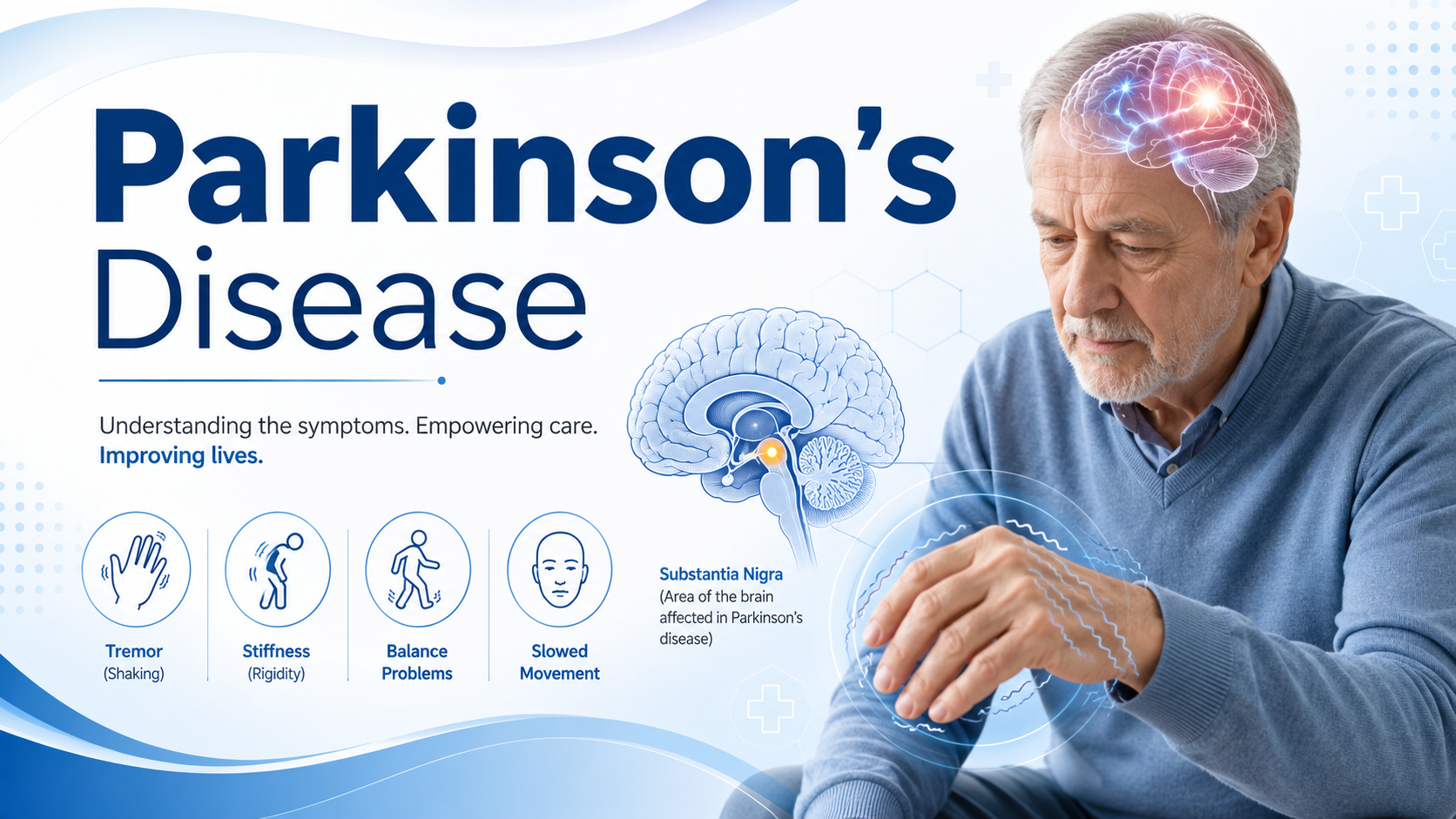
Your hand shakes when you reach for a coffee cup. You notice your handwriting getting smaller each week. Parkinson’s Disease changes how your body moves and responds. Early detection gives you more treatment options and better outcomes.
What Parkinson’s Disease Does to Your Brain
Parkinson’s Disease attacks specific nerve cells in your brain. These cells produce dopamine. Dopamine carries signals that control smooth and coordinated movement. When these cells die, your dopamine levels drop.
The substantia nigra holds most of these dopamine-producing cells. This small area sits deep in your brain’s midbrain region. Damage here causes the movement problems you see with Parkinson’s.
Your brain loses about 60 to 80 percent of dopamine-producing cells before symptoms appear. This happens slowly over many years. Scientists don’t fully understand why these specific cells die. Some theories point to protein buildup called Lewy bodies.
These abnormal protein deposits form inside nerve cells. They contain a protein called alpha-synuclein. Researchers believe these deposits disrupt normal cell function and eventually kill the cells.
Early Warning Signs of Parkinson’s Disease
Tremors don’t always appear first. Many people notice changes in smell or sleep years before movement problems start. You might lose your sense of smell completely without realizing it.
Sleep disturbances show up early too. You might act out dreams by punching or kicking during REM sleep. Your bed partner usually notices this before you do. This happens because Parkinson’s affects the brain areas controlling sleep cycles.
Constipation affects about 80 percent of people with Parkinson’s. This can start a decade before the tremors begin. Your digestive system has nerve cells affected by the same process.
Small handwriting changes creep in gradually. Letters become tiny and cramped together. You might not notice until someone points it out. Depression and anxiety can also appear years before diagnosis.
How Doctors Diagnose Parkinson’s Disease
No single test confirms Parkinson’s Disease. Your doctor watches how you move and reviews your medical history. They look for the hallmark signs: tremor, slowness, stiffness, and balance problems.
The tremor usually starts on one side of your body. It happens when your hand or foot is at rest. The shaking often stops when you use that limb purposefully.
Doctors may order a DaTscan to support their diagnosis. This imaging test shows dopamine activity in your brain. It can’t diagnose Parkinson’s alone but helps rule out other conditions.
Response to levodopa medication provides another diagnostic clue. Most people with Parkinson’s improve significantly when taking this drug. Other movement disorders don’t respond the same way. Your doctor might prescribe levodopa to see how your body reacts.
Medication Options That Help
Levodopa remains the gold standard treatment. Your brain converts it into dopamine to replace what’s missing. It works better than any other medication for controlling symptoms.
Most people take levodopa combined with carbidopa. The carbidopa prevents levodopa from converting to dopamine too early. This combination reduces side effects like nausea and vomiting.
Dopamine agonists mimic dopamine’s effects in your brain. They don’t work as well as levodopa but cause fewer movement complications. Doctors often prescribe them for younger patients or early-stage disease.
MAO-B inhibitors slow down dopamine breakdown in your brain. They provide mild symptom relief on their own. Many people take them alongside levodopa for better control. Natural approaches to managing symptoms can complement your medication routine when done correctly.
Exercise Changes Everything for Parkinson’s Disease
Physical activity slows symptom progression. Research shows exercise protects remaining dopamine-producing cells. You need to move more, not less.
Forced-intensity exercise provides the best results. This means pushing yourself beyond your comfortable pace. Studies using stationary bikes show that higher-intensity cycling improves motor function significantly.
Boxing programs specifically designed for Parkinson’s help with balance and coordination. The quick movements and footwork patterns challenge your brain in beneficial ways. Many cities now offer specialized boxing classes.
Tai chi improves balance better than standard physical therapy. The slow, controlled movements strengthen your core and legs. You practice weight shifting without the fear of falling. Dancing works similarly by combining movement, music, and social interaction.
Aim for 150 minutes of moderate exercise each week. Break this into smaller sessions if needed. Even 10-minute walks add up over time.
Surgical Treatments Worth Considering
Deep brain stimulation helps when medications stop working well. Surgeons implant electrodes into specific brain areas. These electrodes send electrical pulses that block abnormal nerve signals.
The procedure requires two surgeries. First, doctors place the electrodes in your brain. Then they implant a pacemaker-like device under your collarbone. Wires under your skin connect the two.
DBS doesn’t cure Parkinson’s or stop its progression. It reduces tremors, stiffness, and medication side effects. Most people still need medication but at lower doses.
Good candidates typically have had Parkinson’s for at least four years. You should respond well to levodopa but struggle with side effects. Cognitive problems or severe depression may disqualify you. Your doctor runs extensive tests before approving the surgery.
Daily Life Adaptations That Matter
Voice changes happen to about 90 percent of people with Parkinson’s Disease. Your speech becomes softer and more monotone. Others complain they can’t hear you clearly.
Speech therapy using the Lee Silverman Voice Treatment helps tremendously. This program teaches you to speak louder without straining. The benefits extend beyond volume to articulation and breath support.
Swallowing difficulties develop as the disease progresses. You might cough while eating or feel food stuck in your throat. A speech pathologist can teach you safer swallowing techniques. Thickening liquids makes them easier to control.
Kitchen modifications improve safety and independence. Install lever-style faucets instead of knobs. Use lightweight dishes and cups with large handles. Lifestyle adjustments for better movement control make everyday tasks less frustrating and more manageable.
Bathroom grab bars prevent dangerous falls. Place them near the toilet and inside the shower. Consider a shower chair if standing becomes difficult. Remove throw rugs and secure electrical cords along walls.
The Non-Motor Symptoms Nobody Mentions
Cognitive changes affect about 50 percent of people within 10 years of diagnosis. You might have trouble multitasking or planning complex activities. Memory usually stays intact in early stages.
Executive function declines make decision-making harder. You struggle to organize information or shift between tasks. These changes differ from Alzheimer’s disease. Your memories remain accessible even when thinking slows down.
Hallucinations and delusions can develop, especially with advanced disease. You might see people or animals that aren’t there. These usually happen in low light or when you’re tired. Some Parkinson’s medications can worsen hallucinations.
Blood pressure drops cause dizziness when you stand up quickly. Your automatic nervous system doesn’t adjust properly anymore. This leads to lightheadedness and fall risk. Rising slowly from sitting or lying positions helps.
Excessive sweating happens even when you’re not hot or active. It can soak through clothes and feel embarrassing. This occurs because Parkinson’s disrupts your body’s temperature control. Different medications may help manage this symptom.
Finding Support and Planning Ahead
Support groups connect you with people facing similar challenges. Online and in-person options both provide value. Hearing how others handle specific problems gives you practical solutions.
The Parkinson’s Foundation offers free resources and educational materials. They fund research and maintain a helpline for questions. Local chapters organize exercise classes and social events.
Legal and financial planning becomes important after diagnosis. Set up powers of attorney while you can make clear decisions. Discuss your wishes for future care with family members now. Resources for long-term wellness planning help you prepare for changes that may come years down the road.
Working with a Parkinson’s specialist makes a difference. These neurologists focus exclusively on movement disorders. They stay current on the latest treatments and clinical trials. Ask your general neurologist for a referral to a specialist.
Clinical trials test new medications and therapies before they reach the market. Participating gives you access to cutting-edge treatments. You also contribute to research that helps future patients. Many trials provide free medication and close medical monitoring.
Talk to your doctor about which treatment approach fits your specific symptoms and lifestyle.
Frequently Asked Questions
Can Parkinson’s Disease be inherited from parents?
Only about 10 to 15 percent of cases have a genetic link. Most people with Parkinson’s have no family history of the disease. Certain gene mutations increase risk but don’t guarantee you’ll develop it. Genetic testing is available if multiple family members have Parkinson’s.
How fast does Parkinson’s Disease progress?
Progression varies widely from person to person. Some people maintain good function for 20 years or more. Others experience faster decline within five to 10 years. Exercise, medications, and overall health influence how quickly symptoms worsen. Your doctor monitors your progression at regular checkups.
Does Parkinson’s Disease affect life expectancy?
Parkinson’s itself doesn’t usually shorten lifespan significantly. Most people live a normal or near-normal life expectancy with treatment. Complications like falls, infections, and swallowing problems pose the main risks. Good medical care and safety precautions reduce these risks substantially.
Can diet changes help manage Parkinson’s symptoms?
No specific diet stops Parkinson’s progression. Eating protein at dinner instead of earlier helps levodopa work better. High-fiber foods combat constipation, a common problem. Staying hydrated and eating balanced meals supports overall health and medication effectiveness.
When should someone with Parkinson’s stop driving?
Stop driving when reaction times slow or movements become unpredictable. Some people drive safely for years after diagnosis. Others need to quit sooner due to cognitive changes or medication side effects. Your doctor can order a driving evaluation to assess your safety objectively.
For a very long time, I knew no peace because of my Parkinson’s disease, which I suffered from for 8 years with pain and struggles. However, I am grateful to my family for their support and for never giving up on me. I must especially thank my father-in-law, who recommended EarthCure Herbal Clinic to me after they helped him with his Alzheimer’s disease as well. Long story short, I reached out to EarthCure Herbal Clinic through www . earthcureherbalclinic. com, received their treatment, and followed the instructions exactly as directed. To my greatest amazement, I experienced complete relief, as all my symptoms, including resting tremors, muscle rigidity, slowness of movement (bradykinesia), and balance issues, were completely reversed. Today, I live a normal, healthy life. I wholeheartedly recommend EarthCure Herbal Clinic’s health protocol to anyone in need of health assistance, and I advise you to contact them at info @ earthcureherbalclinic. com.