

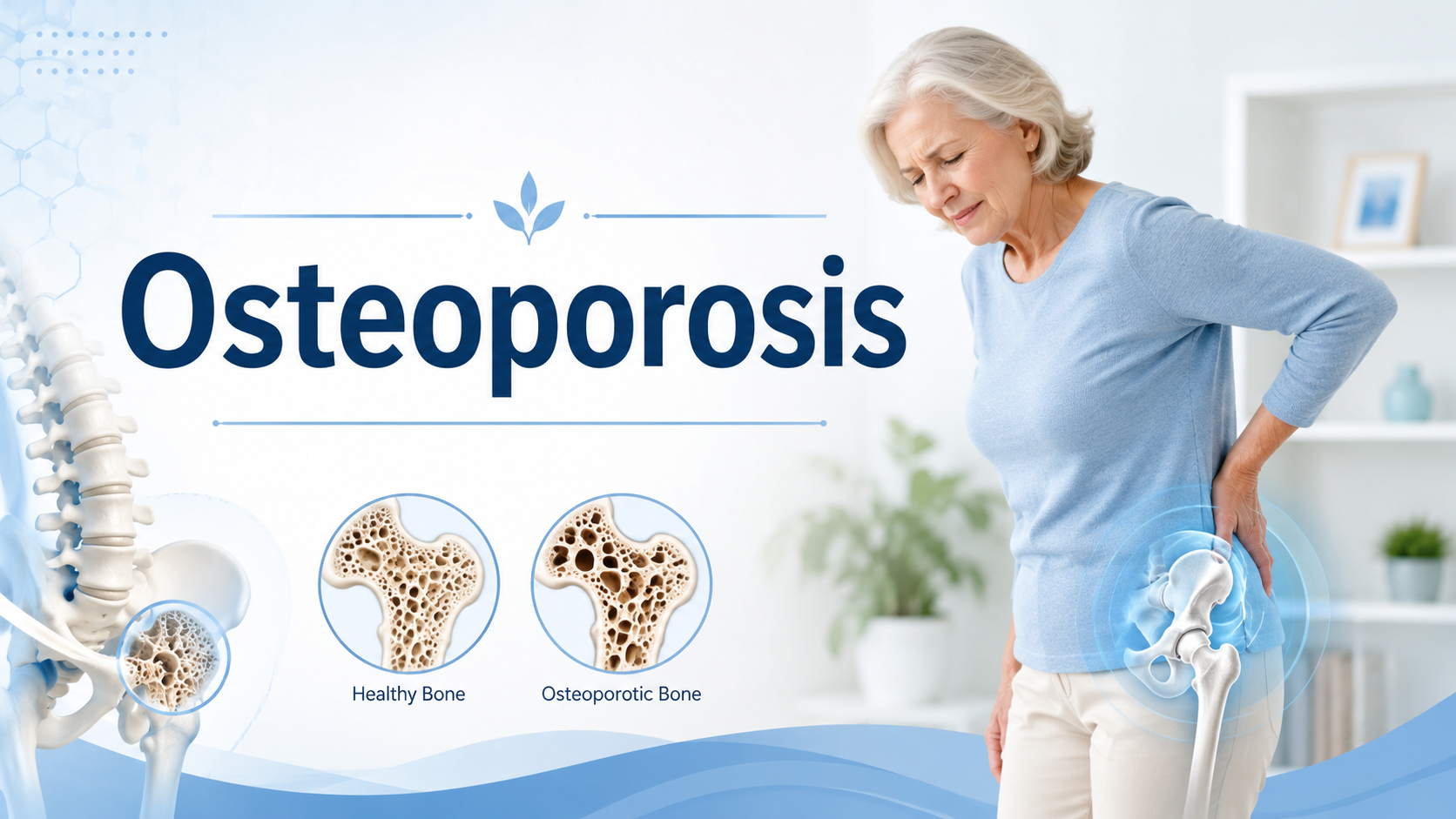
Osteoporosis turns your skeleton into something fragile without warning signs. Your bones lose density year after year in silence. A minor fall becomes a serious fracture. The key is catching bone loss before it catches you.
What Osteoporosis Does to Your Bones
Your bones aren’t solid like you might think. They’re living tissue with tiny holes throughout their structure. Healthy bone tissue constantly breaks down and rebuilds itself. This process keeps your skeleton strong.
Osteoporosis disrupts this balance. Your body breaks down bone faster than it rebuilds. The tiny holes inside your bones grow larger. Your bone mass decreases over time.
Think of it like a sponge becoming more porous. The outer shell of your bone stays intact. The inside becomes weak and brittle. Eventually, bones can break from everyday activities.
Who Faces the Highest Risk
Women experience this condition far more than men. Estrogen protects bone density. Menopause drops estrogen levels sharply. About half of women over fifty will break a bone.
Age remains the biggest factor for everyone. Your bones reach peak mass around age thirty. After that, you slowly lose bone density. The loss speeds up after age fifty.
Family history plays a major role too. If your parents had fractures, you’re at higher risk. Small body frames also increase vulnerability. People under 127 pounds face greater danger.
Certain medications weaken bones over time. Long-term steroid use is a major culprit. Some cancer treatments affect bone density. Thyroid medication can also contribute to loss.
Silent Warning Signs You Shouldn’t Ignore
Most people don’t know they have bone loss. There’s no pain as density decreases. The first sign is often a broken bone. This is why screening matters so much.
Some physical changes can hint at problems. You might notice you’re getting shorter. Loss of height suggests vertebrae are compressing. Even one or two inches matters.
Your posture might change without explanation. A curved upper back develops over time. This happens when spine bones weaken and collapse. People call it a dowager’s hump.
Back pain that comes and goes deserves attention. It could signal small fractures in vertebrae. These compression fractures happen without major trauma. Bending or lifting triggers them.
How Doctors Test for Osteoporosis
A bone density scan is the gold standard. It’s called a DEXA scan. The test takes about ten minutes. You lie on a table while a machine scans you.
The scan measures bone mineral density. Results come as a T-score. A score above negative one is normal. Negative one to negative 2.5 indicates low bone mass. Below negative 2.5 means you have the condition.
Doctors recommend screening for women at sixty-five. Men should get tested at seventy. Younger people with risk factors need earlier screening. Understanding your bone health status helps you take action before fractures occur.
Blood tests can identify underlying causes. Vitamin D levels affect bone strength. Calcium levels matter too. Thyroid function impacts bone metabolism.
Foods That Build Stronger Bones
Calcium is the foundation of bone tissue. Adults need 1,000 to 1,200 milligrams daily. Dairy products are obvious sources. One cup of milk has 300 milligrams.
Non-dairy options work just as well. Sardines with bones provide plenty of calcium. Leafy greens like kale offer good amounts. Fortified orange juice is another option.
Vitamin D helps your body absorb calcium. Your skin makes it from sunlight. Fifteen minutes outside usually provides enough. Fatty fish like salmon contain vitamin D too.
Protein supports bone structure more than people realize. Your bones are about half protein. Aim for protein at every meal. Lean meats, beans, and eggs all work.
Magnesium and vitamin K also support bone health. Nuts and seeds provide magnesium. Green vegetables contain vitamin K. A varied diet covers most bases.
Exercise That Protects Your Skeleton
Weight-bearing exercise forces bones to work harder. Walking counts as weight-bearing activity. Jogging is even better. Dancing works too.
Your bones respond to stress by getting stronger. Regular impact signals them to maintain density. Thirty minutes most days makes a difference. Swimming doesn’t count because water supports your weight.
Strength training adds another layer of protection. Lifting weights pulls on bones through tendons. This stress stimulates bone growth. You don’t need heavy weights to benefit.
Balance exercises prevent falls and fractures. Tai chi improves stability significantly. Yoga builds strength and balance together. Standing on one foot while brushing teeth helps.
Start where you are now. Walking around your block is better than nothing. Add resistance bands at home. Progress slowly to avoid injury.
Medications That Slow Bone Loss
Bisphosphonates are the most common treatment. They slow the breakdown of bone tissue. Brand names include Fosamax and Boniva. Most people take them weekly or monthly.
These drugs can cause digestive side effects. Some people experience heartburn or nausea. You must take them on an empty stomach. Stay upright for thirty minutes afterward.
Hormone therapy works for some postmenopausal women. Estrogen helps maintain bone density. The treatment carries risks though. Doctors weigh benefits against potential side effects.
Newer medications build bone instead of just stopping loss. Teriparatide is one example. It’s given as a daily injection. This option suits people with severe cases.
Denosumab is another newer choice. You get an injection twice yearly. It blocks cells that break down bone. Side effects are generally mild.
Lifestyle Changes That Make a Real Difference
Smoking damages bones in multiple ways. It reduces calcium absorption. It lowers estrogen levels in women. Quitting improves bone health at any age.
Alcohol in excess weakens bones too. More than two drinks daily is risky. Alcohol interferes with calcium balance. It also affects vitamin D production.
Caffeine in large amounts may hurt bone density. More than four cups of coffee daily matters. Each cup increases calcium loss slightly. Adding milk to coffee helps offset this.
Falls cause most fractures in people with weak bones. Make your home safer. Remove loose rugs. Improve lighting in hallways. Install grab bars in bathrooms.
Wear shoes with good support and traction. Avoid walking in socks on smooth floors. Keep frequently used items within easy reach. Simple changes prevent devastating breaks.
Living Well With Osteoporosis
A diagnosis doesn’t mean giving up activities. You can still enjoy life fully. You just need to be smart about risks. Taking proactive steps to strengthen your bones allows you to maintain independence and mobility.
Stay active but choose activities wisely. Avoid high-impact sports with fall risks. Golf is usually fine. Tennis might be too jarring. Listen to your body.
Keep up with regular doctor visits. Monitoring bone density shows if treatment works. Your doctor might adjust medications over time. Annual checkups catch problems early.
Connect with others facing the same challenges. Support groups offer practical tips. Online communities provide encouragement. You’re not alone in this.
Focus on what you can control. Eat well. Exercise regularly. Take prescribed medications consistently. Managing bone health effectively prevents fractures and maintains quality of life for years to come.
Talk to your doctor today about scheduling a bone density test.
Frequently Asked Questions
Can you reverse osteoporosis once you have it?
You can’t fully reverse the condition. You can improve bone density with proper treatment. Medications combined with diet and exercise slow progression. Some people see modest increases in bone mass. Early treatment produces the best outcomes.
How quickly does bone loss happen?
Bone loss happens gradually over many years. Women lose up to 20% of bone density during menopause. The five to seven years after menopause are critical. Men lose bone more slowly. Annual loss is typically one to two percent.
Is osteoporosis painful?
The condition itself doesn’t cause pain. You only feel pain when a fracture occurs. Compression fractures in the spine can hurt significantly. Some people experience chronic back pain from multiple fractures. Preventive care avoids this pain entirely.
What’s the difference between osteoporosis and osteopenia?
Osteopenia means lower than normal bone density. It’s less severe than full osteoporosis. T-scores between negative one and negative 2.5 indicate osteopenia. Below negative 2.5 is osteoporosis. Osteopenia often progresses without intervention.
Do men need to worry about bone loss?
Men absolutely develop this condition too. About 25% of men over fifty will break a bone. Men’s fractures often happen later in life. They’re also more likely to die from hip fractures. Screening and prevention matter for everyone.